
Scrum Master: two profiles, two attitudes, or schizophrenic?
And always the same answer: “it depends on your context”

And always the same answer: “it depends on your context”
Cet article est également disponible en français.
Several Scrum Master profiles
The Scrum Master role can be tackled in different ways. We could even talk about different Scrum Master profiles. Different profiles for different contexts.
First context: to quickly grow an effective team
You are a contractor, at a client site. By the way it is also the case of everybody in the team, only made up of contractors, and with a rather high turn-over rate. All these people are first and foremost “resources”, numbers on a budget line.
What are the client’s expectations?
Objectively:
The client wants the team to be productive, effective (whatever that means, I can see you going)
And above all the client wants it quickly
Of course the client wants results quickly, otherwise why would she bother hiring a Scrum Master in the team???
In this kind of context, the first role of the Scrum Master is to make sure that the machine is running and that it is running in a predictible way.
In other words, we are a long way from self-organization, product vision, and all this kind of stuff.
Let’s call this Scrum Master profile the “Production” Scrum Master.

What are the tools of trade of the “Production” Scrum Master?
Sometimes authoritative, she helps setting up processes and methods that works well, without always trying to make them emerge from the team
She will naturally be concerned by process implementation and checklists, rather than mindset
Indicators will be fundamental; for instance the burndown chart will help detect as soon as possible when the team needs help
Her reference material might be about XP or eXtreme Programming, a complete set of proven yet very prescriptive best practices
Finally, she keeps in mind that every team member — she included — is costing money to the client: first and foremost we are here to deliver to the client
If the client hired a Scrum Master to support the team, it is obvious that the client expects to get value for money!
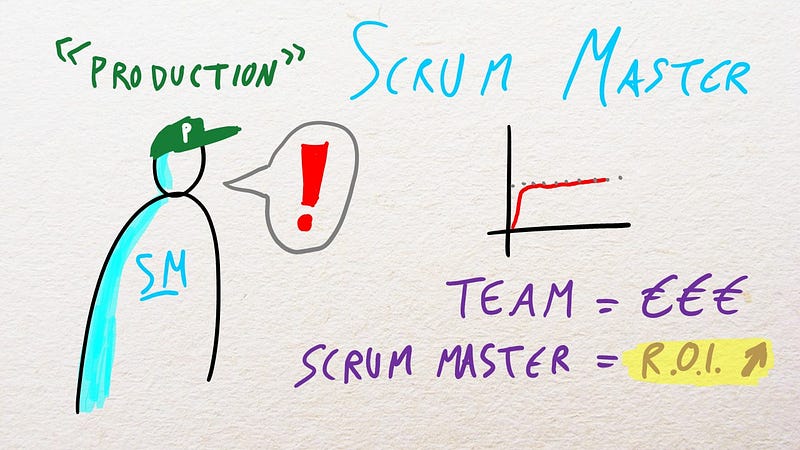
Why is a “Production” Scrum Master added to a team?
The client sees the team as a cost center
Thus the stakes are indeed to talk about return on investment
The Scrum Master will be the driving force behind this return on investment
But beware! In the medium term this kind of Scrum Master profile will have a limited effect if not a dangerous influence on the team.
The Scrum Master will indeed get an effective team quickly, mainly thanks to his authoritative demeanor and his focus on process following (a team can go incredibly far by strictly following a good process!)
But this very demeanor will also prevent the team from going further than this simple “running team” state: while the team will quickly be effective and in a predictible way, the amount of value that the team produces will soon cap and then the team will not progress much more beyond this capping
Even worse, if the Scrum Master in question leaves the team, it is very likely that everything falls apart
Is the “Production” Scrum Master the next generation Project Manager?
As I am sure you have understood, this profile is indifferent to self-organization — one of the very essential elements of Agility — to take matters into her own hands.
It is no wonder that it is very easy to get the team at an acceptable production level and in a predictible way, and to get it quickly
At the same time this person has become central, essential, critical
And the team is restricted in the level of excellence that it will be able to reach, by a lack of self-organization
In the end, when a client is looking for a “Scrum Master/Project Manager”, isn’t it the case that the client is exactly looking for this kind of profile?
Basically the mindset is the same, self-organization is not seen as an obvious need, and we can even hear things like “we”re not here to have fun”
However we sprinkle around tools and ways of doing coming from Scrum and Agile in general, by making dynamic roadmaps, by never cutting corners on quality, by delivering iteratively, and so on

Second context: striving for excellence
You’re finding yourself passing an interview. Your maybe-future employer is telling you the company’s ambition: to become the next Google or Amazon of their niche. To get there, they need you to help the team become the cream of the crop.
What are the client’s expectations?
The client aims at excellence, to become the market leader
The challenge is not really about succeeding quickly, but about succeeding at all — and then to always keep improving and staying on top
In this kind of context, the first role of the Scrum Master is to help the team always getting better, focusing at all times on what really matters.
The key elements, the pillars on which the Scrum Master will work at all times will naturally be self-organization and product vision.
Let’s call this other Scrum Master profile the “Excellence” Scrum Master.
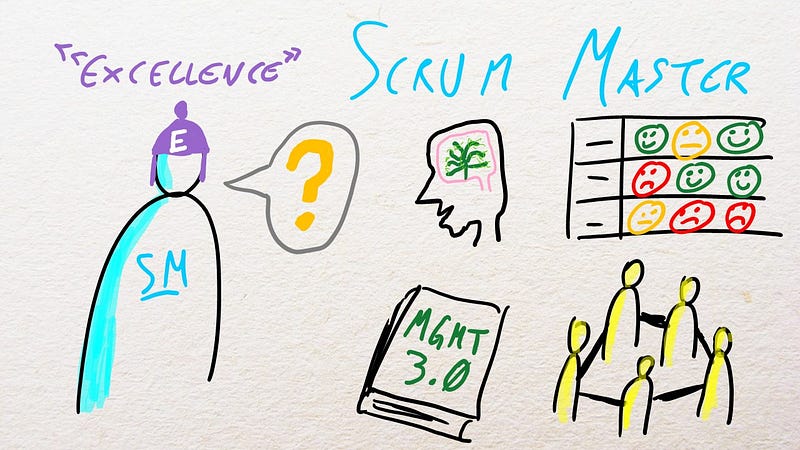
What are the tools of trade of the “Excellence” Scrum Master?
First and foremost this Scrum Master will use questioning to help ideas, methods and processes to emerge from the team
A very strong focus on mindset rather than on practices
This Scrum Master will have a deep interest in the team mood, what are the relations between the various team members, are they happy, are they thriving in this team
Her reference material might be Management 3.0, elements about changing the environment, and about people’s wellness and deep motivations
Finally, her primary concern is always about team self-organization, which will make emerge the best possible solution to the team’s context — by the team!
What matters truly is and above all the team!
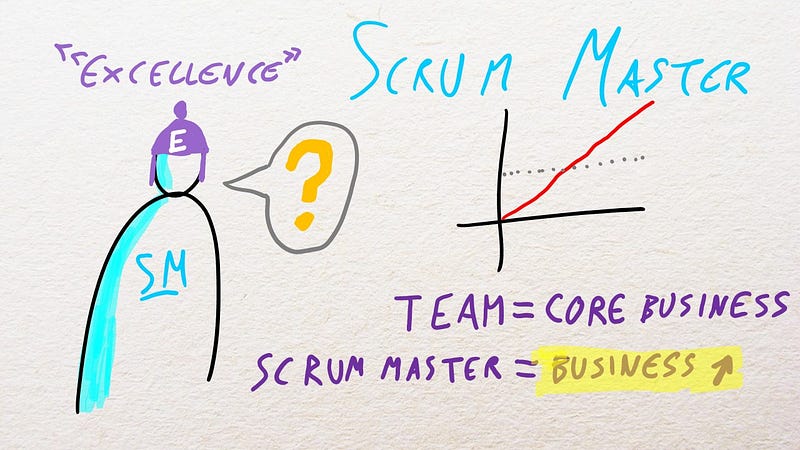
Why is an “Excellence” Scrum Master added to a team?
The client sees the output of the team as a product which is the core business of the company
A better running team means a better product which means in turn a successful company
The Scrum Master will help building and supporting the environment that favors this continuous development of the team — and indirectly of the product and of the business
The negative side of this Scrum Master profile is the time that a new team takes to reach this first effective and predictible level, compared to the previous Scrum Master “Production” profile.
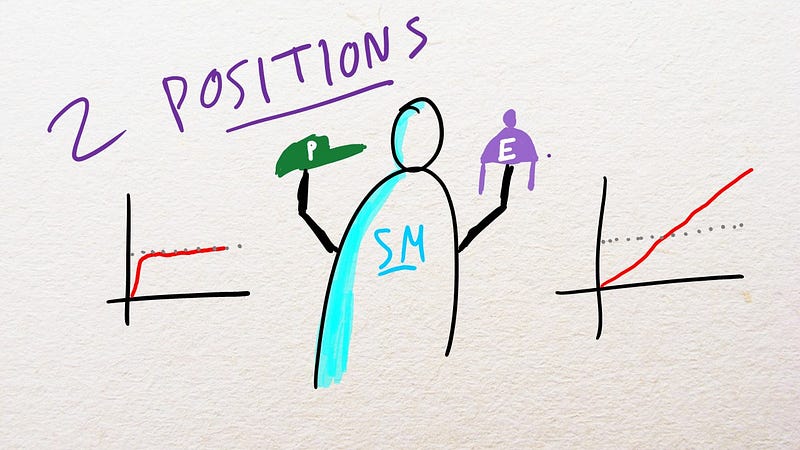
Two conflicting profiles or two different attitudes?
These two Scrum Master profiles are actually attitudes instead. The experienced Scrum Master will know how to use each attitude depending on the context.
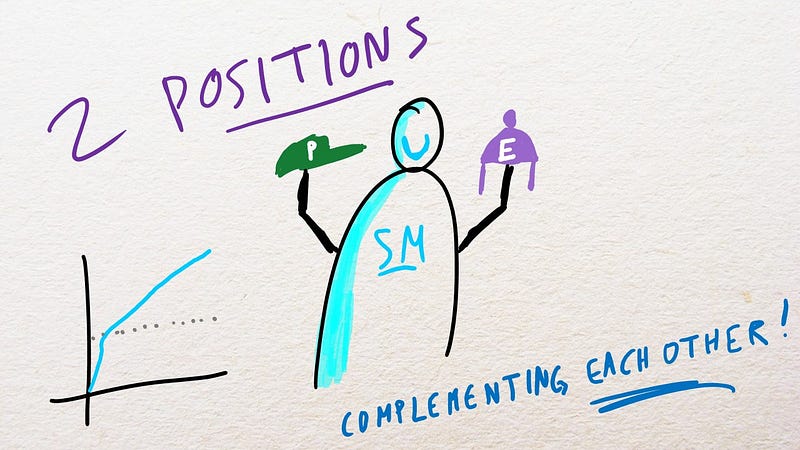
Even better, these two attitudes are complementing each other:
A new, rookie team, will benefit from a Scrum Master in the “Production” attitude, helping the team to quickly become effective. The team will meet initial success while building itself as a team.
Later, the Scrum Master will take the “Excellence” attitude to foster the team’s self-organization while getting herself out of the way.
Be careful not to play too much with fire
While I see no problem with the “Excellence” attitude, I want to point out the risks of assuming the “Production” attitude.
I personally endorse using sparingly these tools and methods that help getting quick results.
Yet you must be careful not to abuse these sometimes authoritative methods, because over-using them will prevent the team from becoming an actual, real Agile team.
Liked this article? Show it!
Please clap 👏 and share the article! It is because of you that I put my heart and soul into writing.
And follow me on my blog to be notified when I publish new articles!
Thank you so much!